Few moments in Australian art are as celebrated as the summers of the late 1880s, when a handful of young Melbourne painters set up camps in the bush and by the bay and tried to capture the light, heat and colour they saw around them. The group, later called the Heidelberg School, produced some of the best-loved images in Australian art: shearers in a woolshed, golden paddocks under a high sky, families on the beach. This guide explains who they were, what they were trying to do, the exhibition that announced them and where you can see their work in Melbourne today.
1889
9 by 5 Impression Exhibition
Opened 17 August, Melbourne
183
Small works shown
Many on cigar-box lids
Plein air
Their method
Painting outdoors, from life
Painting outdoors
In the 1880s, most academic painting was done in the studio, often from sketches, with careful finish and conventional colour. The young painters who became the Heidelberg School wanted something different. Influenced by ideas circulating from Europe, including French plein-air painting, they took their materials outdoors to paint directly from the landscape. They wanted to record the particular quality of Australian light: the glare, the blue haze, the bleached grass and the hard shadows of a summer afternoon.
Painting outdoors meant working quickly. Light changes by the minute, and so do clouds, shadows and colour. The artists developed a looser, more direct way of painting, with visible brushstrokes and bold colour, that many viewers at the time found unfinished.
The artists' camps
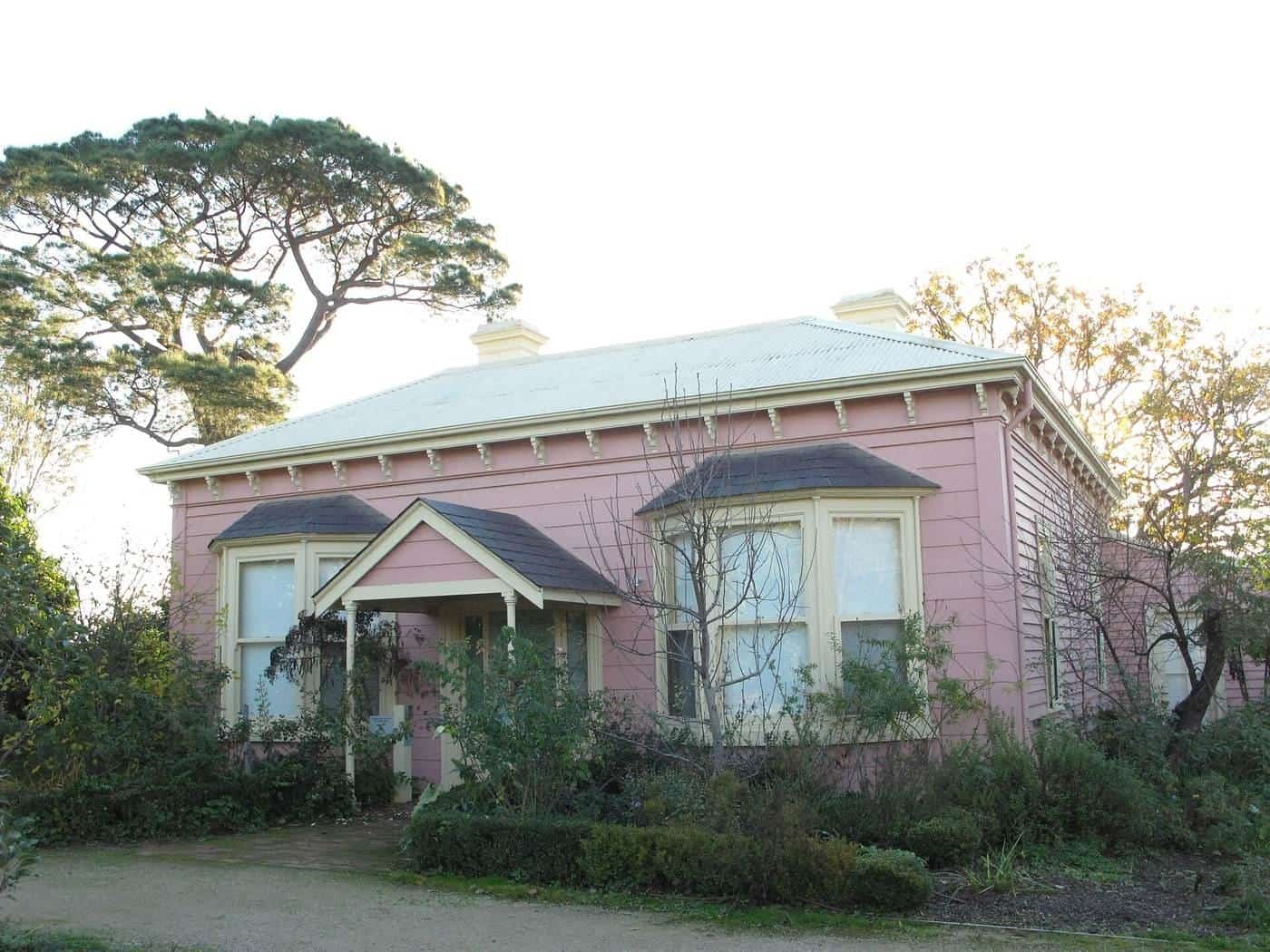
The artists painted together at a series of camps around Melbourne in the late 1880s, including at Box Hill, Mentone on the bay and around Heidelberg, then a rural district on the Yarra north-east of the city. The best known camp was at Eaglemont, near Heidelberg, which gives the movement its later name. Camps were informal: a few artists sharing a cottage or tents, painting by day and talking art by night, with friends visiting from the city on weekends.
The camps mattered because they gave the artists time, company and subject matter. The landscapes they painted there, of paddocks, gums, creeks and distant hills, became the core of the movement's imagery.
The 9 by 5 Impression Exhibition
The NGV's essay on Tom Roberts's By the Treasury explains that the 9 by 5 Impression Exhibition opened on 17 August 1889 at Buxton's Art Gallery in Melbourne. It showed 183 small works, many painted on wooden cigar-box lids measuring about nine by five inches. The small size made the works quick to paint and affordable to buy.
The artists called their works "impressions", a deliberate statement that they were recording fleeting effects of light and atmosphere rather than producing polished studio pictures. They designed the exhibition carefully, with decorated catalogues and a fashionable hang. Some critics were scathing, describing the works as sketchy and unfinished. The artists replied publicly, defending their approach. The controversy helped attract attention, and the exhibition is now seen as a landmark. The National Museum of Australia lists it among its Defining Moments in Australian history.
Key artists
Tom Roberts
Roberts had studied in London and travelled in Europe, and brought back ideas about painting outdoors. He was a leading figure in the camps and painted both landscapes and scenes of working life. His large painting Shearing the Rams, completed in 1890, shows shearers at work in a woolshed and became one of the most familiar images of rural Australia.
Arthur Streeton
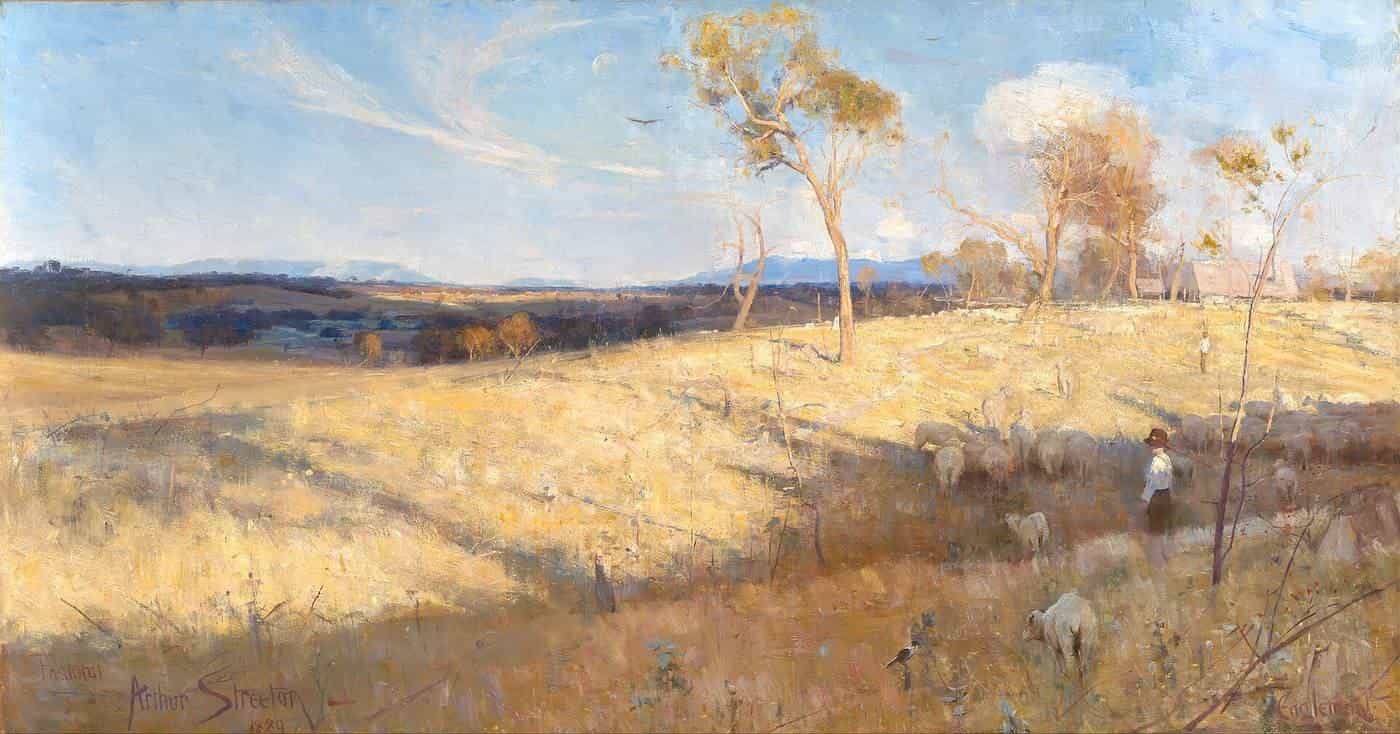
Streeton was the youngest of the core group and painted some of its most luminous landscapes. Golden Summer, Eaglemont, from 1889, shows sun-bleached grassland stretching to distant hills under a hot sky. His work came to define the idea of the golden, sunlit Australian landscape.
Charles Conder
Conder painted with a light, decorative touch. A Holiday at Mentone, from 1888, shows people enjoying a sunny day by the bay and is often seen as one of the first major works of the movement. Conder later left Australia and worked in Europe.
Frederick McCubbin
McCubbin was a teacher at the National Gallery School and a mentor to younger artists. His larger narrative paintings, often of bush life and settler stories, are among the best known Australian paintings of the period.
Why it matters
The NGV describes the Heidelberg School as the first truly Australian art movement. Its paintings were made in the decades before Federation, when ideas of national identity were being debated, and they were later taken up as images of what it meant to be Australian.
That national story is worth looking at critically too. The paintings show a landscape that had been Aboriginal Country for tens of thousands of years, yet First Peoples are almost entirely absent from them. The idealised pastoral scenes also leave out much of the hardship and conflict of colonial life. Seeing the works with this in mind doesn't diminish their beauty or importance, but it adds depth to how we read them.
Seeing the works today
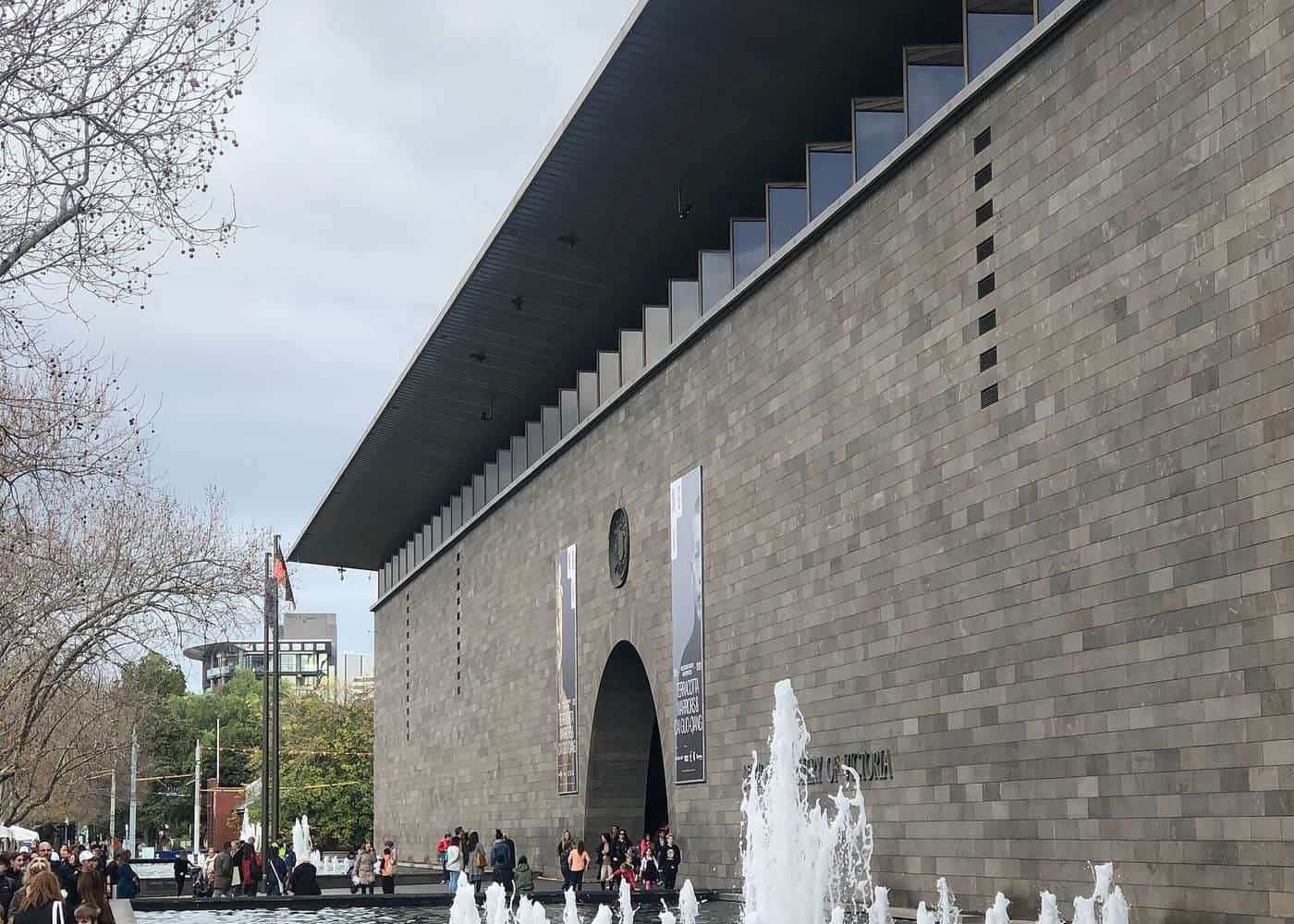
The Ian Potter Centre: NGV Australia at Federation Square is dedicated to Australian art from the NGV collection, and the NGV says entry to the State Collection is free, though some exhibitions are ticketed. Displays change, and works travel or rest, so check the NGV website for what's on view before you go. Other state galleries around Australia also hold major Heidelberg School paintings.
The landscapes themselves have changed enormously. Heidelberg, Box Hill and Mentone are now suburbs, but there are local heritage trails and markers in some areas that point out where the artists worked.
Looking closely
When you stand in front of a Heidelberg School painting, try:
- stepping close to see the brushwork, then stepping back to see how it resolves into light and form;
- looking at the shadows, which are often blue or purple rather than grey or black;
- noticing the time of day the painter seems to have chosen, and how the light shows it;
- comparing small impressions with large finished works, which were often developed in the studio from outdoor studies.
The 9 by 5 works today
Many of the small impressions from the 1889 exhibition survive in public and private collections. Seeing one up close shows how quickly and freely they were painted, often with the grain of the cigar-box lid visible beneath the paint. If you're lucky enough to see one on display, compare it with the larger finished paintings nearby.
Further reading
The NGV's online essays, the National Museum of Australia's Defining Moments page on the 9 by 5 exhibition and exhibition catalogues from state galleries are reliable places to learn more.
Key points
- The Heidelberg School painted outdoors around Melbourne in the late 1880s and 1890s.
- The 9 by 5 Impression Exhibition opened on 17 August 1889 with 183 small works.
- Tom Roberts, Arthur Streeton, Charles Conder and Frederick McCubbin are the best known artists.
- The NGV describes it as the first truly Australian art movement.
- See works at The Ian Potter Centre: NGV Australia, checking what's on display first.
Frequently asked questions
What was the Heidelberg School?
A group of artists working in and around Melbourne in the late 1880s and 1890s who painted outdoors to capture Australian light and landscape. The NGV describes it as the first truly Australian art movement.
Who were the main artists?
Tom Roberts, Arthur Streeton and Charles Conder are the best known, with Frederick McCubbin and others closely associated with the group.
What was the 9 by 5 Impression Exhibition?
An exhibition that opened on 17 August 1889 at Buxton’s Art Gallery in Melbourne, showing 183 small oil sketches, many painted on cigar-box lids about 9 by 5 inches.
Why is it called Heidelberg?
The name comes from the area around Heidelberg, then on Melbourne’s rural fringe, where some of the artists painted at camps such as Eaglemont.
Where can I see Heidelberg School paintings?
The Ian Potter Centre: NGV Australia at Federation Square displays Australian art from the NGV collection, and other state galleries hold important works too. Check what is on display before you visit.
Sources and further reading
Facts on this page were checked against these primary and official sources. Conditions change — confirm before you travel or buy.
- Tom Roberts’s By the Treasury (essay) — National Gallery of Victoria
- 9 by 5 exhibition (Defining Moments) — National Museum of Australia
- About the NGV — National Gallery of Victoria