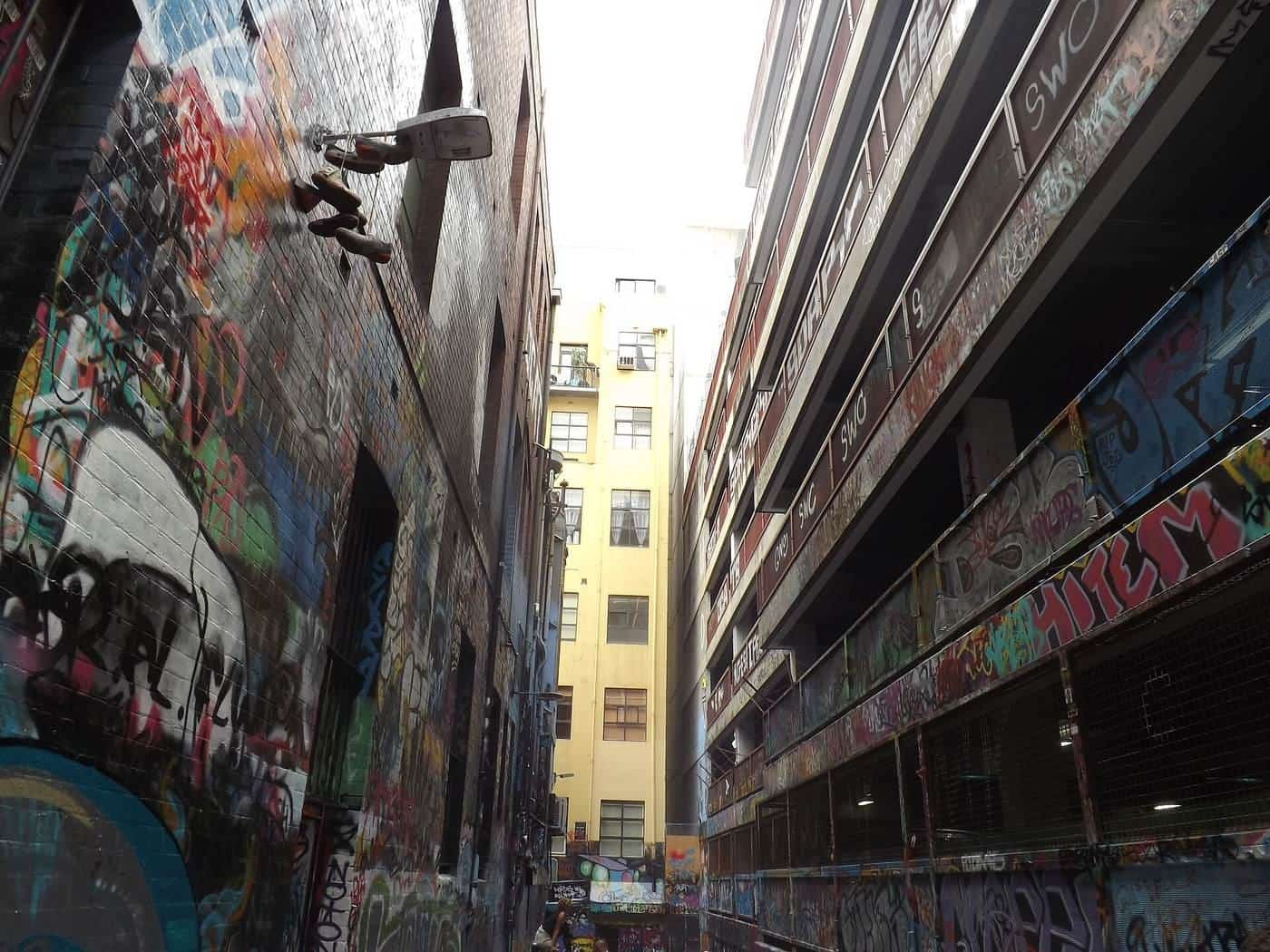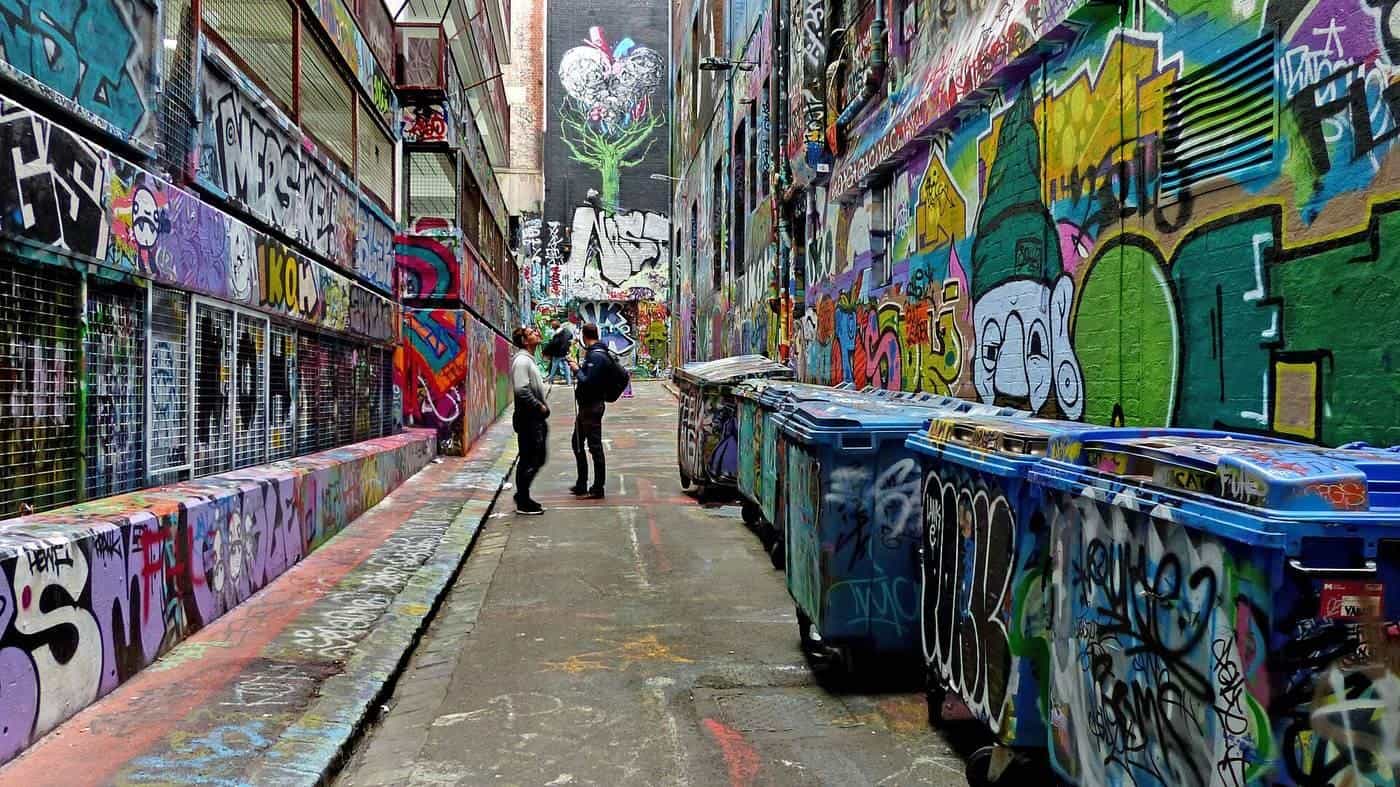
Melbourne's laneways are one of its best-known sights: narrow bluestone lanes where every surface is covered in stencils, paste-ups, murals, tags and sticker art. Unlike a gallery, the art changes constantly as new work is painted over old. It can be exhilarating, chaotic, political, funny and beautiful, sometimes all on one wall. This guide explains what you're looking at, where to start, how the rules work and how to be a considerate visitor.
Hosier Lane
Best-known lane
Opposite Federation Square
Weekly
How often it changes
Works are painted over constantly
Permission
What makes it legal
Owner consent and any permit
What you're looking at
Street art is a broad term. In Melbourne's lanes you'll see:
- murals, large painted works, often commissioned or painted with permission;
- stencils, images sprayed through cut templates, often with political or humorous messages;
- paste-ups, paper posters or drawings pasted onto walls;
- tags and throw-ups, stylised names and lettering, the roots of graffiti writing culture;
- stickers, small sculptures and installations tucked into corners and doorways.
Some works are by internationally known artists, others by locals and first-timers. Many are unsigned. Part of the appeal is the layering: a new piece painted over the edge of an old one, with traces of earlier work underneath.
Hosier Lane and beyond
Hosier Lane, off Flinders Street opposite Federation Square, is the most famous lane. The City of Melbourne describes it as a long-standing exception where painting is tolerated without the usual permissions, which is why the walls change so often. It can be crowded, especially on weekends.
Other lanes and streets in and around the CBD also have street art, as do inner suburbs. The concentration and character vary, and new murals appear regularly. Rather than relying on lists that date quickly, wander the lanes near Hosier Lane and the CBD and see what you find. Our self-guided art walks suggest routes.
How street art and the law work
The City of Melbourne distinguishes between street art and graffiti. Street art on private property generally requires the written permission of the property owner, and a council permit may also be required, particularly in heritage areas. Graffiti is marking someone else's property without permission and is illegal. Our guide to street art and the law explains the details.
For visitors, the key point is simple: look, photograph and enjoy, but don't add your own marks unless you have permission.
Etiquette
- Respect artists at work. If someone is painting, give them space and ask before photographing them.
- Don't touch or remove work, including stickers and paste-ups.
- Keep the lane passable. Lanes are working spaces for businesses, deliveries and residents.
- Be considerate with photos. Don't block the lane for long shoots, and be mindful of other people in your frame.
- Take your rubbish with you.
- Support local businesses in the lanes, such as cafes and bars.
Photography
Photographing street art from public lanes is common and generally fine for personal use. If you want to use images commercially, the artworks may be protected by copyright, and you may need the artist's permission. Commercial shoots in the city may also need council permits.
Staying safe
- Watch for vehicles. Some lanes have deliveries and cars.
- Watch your footing. Bluestone can be uneven and slippery when wet.
- Be aware of fumes near artists spraying paint.
- Visit in daylight if you're unfamiliar with the area.
- Keep belongings secure in crowded lanes.
Tours
Several operators run street art tours, some led by artists, which explain techniques, history and the stories behind works. Tours can be a good way to understand what you're seeing. Check reviews and what's included before booking.
A changing gallery
Because works are painted over so often, it's worth returning. A lane you visited a year ago may look completely different. Some people document the same wall over time and find that the layers tell their own story. That impermanence is part of what makes Melbourne's street art so distinctive.
Understanding the styles
Spend a little time in the lanes and you'll start to recognise styles.
- Lettering and wildstyle: elaborate, interlocking letters that grew out of graffiti writing culture. They can be hard to read but are often technically impressive.
- Characters: cartoon figures, animals and faces, sometimes recurring across the city as an artist's signature.
- Photorealism: large painted portraits and scenes so detailed they look like photographs.
- Stencils: crisp, repeatable images, often with a political or satirical message.
- Paste-ups: drawings, prints or photographs printed on paper and pasted onto walls, often layered and torn over time.
Look for repeated motifs. Some artists leave the same character or symbol in many places, and spotting them becomes a game.
Reading the layers
Street art is rarely seen in isolation. A wall may show a commissioned mural, a tag over its edge, a paste-up added later and stickers on top. Each layer is a conversation between artists, sometimes respectful, sometimes not. There are informal codes about painting over others' work, and conflicts sometimes play out on the walls themselves.
Street art beyond the CBD
Many inner suburbs have street art too, often in side streets and laneways near shopping strips. Large-scale murals on the sides of buildings have become more common, sometimes commissioned through council or community programs. Exploring a new suburb with an eye for walls can be a great way to see a different side of Melbourne.
Visiting with children
Children often love street art: bright colours, characters and the sense of discovery. Keep a close eye on them in lanes with vehicles, avoid lanes at night and talk about why some art is painted with permission and some isn't. Our guide to street art and the law can help with that conversation.
Respecting the neighbourhood
The lanes are not just attractions; they're workplaces and, in some cases, homes. Businesses rely on access for deliveries and rubbish collection, and residents live above some lanes. Visiting respectfully, keeping noise down and supporting local businesses helps keep the lanes welcoming.
Planning your visit
Allow at least an hour to explore Hosier Lane and the nearby lanes without rushing, longer if you want to photograph. Combine your visit with Federation Square and The Ian Potter Centre across the road, or with a walk along the river. Our art day planner can help you fit it into a day, and our self-guided art walks suggest routes.
What to wear and bring
Wear comfortable, closed shoes for uneven bluestone, and bring a light layer, as lanes can be shady and cool. In wet weather, take care on slippery surfaces. A phone or camera is all you need for photos; tripods can block narrow lanes, so use them considerately.
Respecting the artists
Street artists often work without pay and with the knowledge that their work may disappear within days. Respect that effort: don't deface works, credit artists when you share photos and know their names, and consider supporting artists by buying prints or commissioning work through legitimate channels.
Key points
- Hosier Lane, opposite Federation Square, is Melbourne's best-known street art lane.
- Street art changes constantly as works are painted over.
- Street art needs owner permission and sometimes a council permit; graffiti without permission is illegal.
- Respect artists, businesses and other visitors, and don't add or remove marks.
- Visit in daylight, watch for vehicles and keep belongings secure.
Frequently asked questions
Where is Hosier Lane?
In the Melbourne CBD, running off Flinders Street opposite Federation Square.
Is street art legal in Melbourne?
Street art painted with the property owner’s permission, and any required council permit, is legal. Graffiti, meaning marking property without permission, is illegal. The City of Melbourne treats Hosier Lane as a long-standing exception where painting is tolerated.
Does the street art change?
Constantly. Works are painted over regularly, so what you see one week may be gone the next.
Can I take photos?
Yes, photographing street art from a public lane is common. Be considerate of other visitors, artists at work and businesses in the lanes.
When is the best time to visit?
Daylight hours on weekdays are usually quieter. Weekends can be crowded with visitors and photographers.
Sources and further reading
Facts on this page were checked against these primary and official sources. Conditions change — confirm before you travel or buy.
- Street art — City of Melbourne
- Managing graffiti — City of Melbourne
- Art and Heritage Collection — City of Melbourne